Tourism, Infrastructure, and Market Depth
Georgia's real estate thesis is not built on one single demand driver. The more durable case is the combination oftourism, domestic urban demand, foreign investment, and infrastructure-led development.

Georgia Market Outlook 2026
The Republic of Georgia has emerged as one of the more closely watched real estate markets in the Black Sea and Caucasus region.
Compared with Portugal and Western Europe, it offers lower entry prices, stronger economic growth, and exposure to an earlier-stage market, though with higher political and liquidity risk.For U.S. investors, Georgia provides access to a real asset market supported by tourism, urbanization, foreign investment, infrastructure development, and its strategic position between Europe, Turkey, Central Asia, and the Middle East.According to the IMF, Georgia recorded 7.5% real GDP growth in 2025, with growth projected at 6.5% in 2026 before gradually moderating toward its long-term trend.

7.5% GDP Growth 2025
6.5% IMF Forecast 2026
$4.69B Tourism Revenue
American investors look at Georgia for a different reason than they look at Western Europe. Portugal offers eurozone stability and lifestyle-driven demand. Georgia offers a higher-growth, earlier-stage market with lower entry prices and potentially stronger upside in selected locations.Georgia is not a market for passive assumptions. It rewards local knowledge, developer diligence, and effective selection. Investors should not treat every new tower, resort, or waterfront project as a strong investment simply because the broader market is growing.
Above-average economic growth compared with most developed European markets
Lower real estate entry prices than most Western European markets
Expanding tourism and hospitality demand, especially in Tbilisi and the Black Sea region
Foreign buyer interest and relatively open real estate ownership structures
Development momentum in Tbilisi, Batumi, and selected resort markets
A strategic location between Europe, Turkey, Central Asia, and the Middle East
Large-scale international development announcements that have increased market visibility
Georgia enters 2026 with several important market drivers.

Economic growth remains strong. Georgia's economy grew 7.5% in 2025, according to IMF reporting. The IMFprojects 6.5% real GDP growth for 2026, still well above most developed European markets, while noting thatgrowth is expected to moderate over time

Tourism has recovered and continues to expand. Georgia recorded record tourism revenue of approximately $4.69billion in 2025, while international traveler activity continued to recover and expand. Tourism supports hospitality,short-term rentals, retail, and selected coastal and urban real estate demand. Investors should be careful with theterminology: Georgia's public data may distinguish between tourist visits, international visits, and traveler visits.

Tbilisi residential demand is stabilizing, not overheating. Galt & Taggart's January 2026 residential marketreporting shows Tbilisi recovering after a weaker start to 2025, with 42,388 apartment sales for the year andaverage primary-market pricing around $1,334 per square meter. This points to a market finding its footing, not amarket that should be treated as risk-free.

Large-scale development is increasing international attention. Georgia's announced $6.5 billion Eagle Hills /Emaar-linked development initiative has increased attention around Tbilisi and the Black Sea corridor. Thisshould be treated as a market-visibility signal, not as proof of project-level investment safety
Georgia's real estate thesis is not built on one single demand driver. The more durable case is the combination oftourism, domestic urban demand, foreign investment, and infrastructure-led development.
Tourism is most visible in Tbilisi, Batumi, Gudauri, Bakuriani, and other resort areas. Tbilisi benefits frombusiness travel, culture, long-stay visitors, and a resident international population. Batumi and the Black Sea coastare more tourism- and resort-driven, which can create higher upside but also more seasonality.
Infrastructure and major development projects can improve access, visibility, and long-term demand in selectedareas. But infrastructure upside should be treated carefully. Planned projects can be delayed, redesigned,repriced, or affected by political and funding constraints. Real estate performance ultimately depends on thespecific asset, not only the surrounding market story.
Supply matters too. In Tbilisi, elevated permitting and construction activity have kept oversupply risk on the radar,although recent reporting suggests some normalization. In Batumi, investors must be especially careful with towerdensity, project delivery, rental assumptions, foreign-buyer demand, and exit liquidity.
The conclusion is simple: Georgia can be attractive, but broad market growth is not enough. The investment must
be tested at the project level.
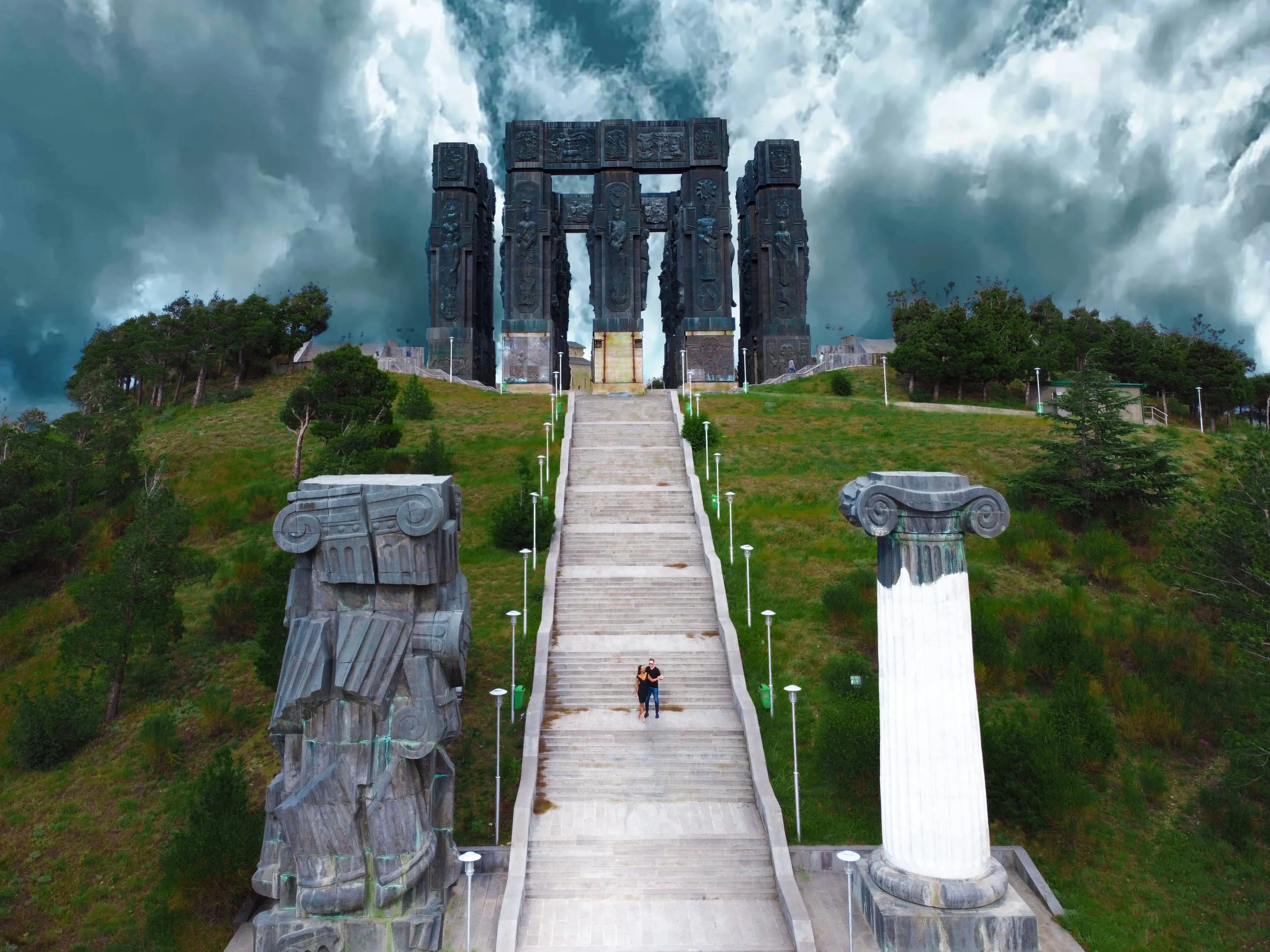
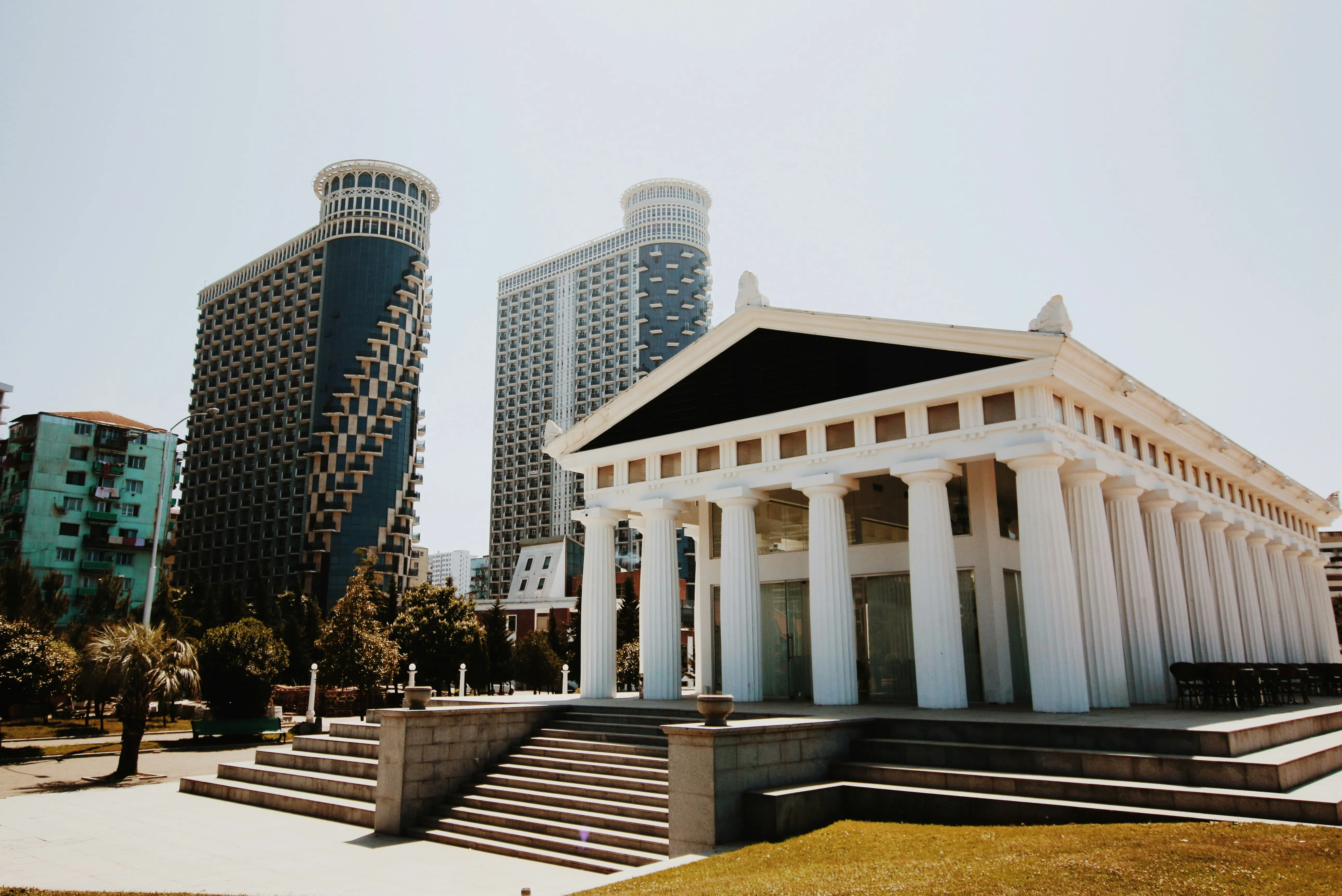

Georgia is attractive, but it carries meaningfully higher risk than developed Western European markets. An investor should evaluate the market with clear eyes.
Large-scale international investment announcements can support market confidence, but they do not remove project-level risk. Success in Georgia depends on selecting the right city, neighborhood, developer, price point,rental model, holding period, and exit path - not simply buying into a growth market or a headline deal.
Key risks include:
Political and regulatory uncertainty
Currency fluctuations
Regional geopolitical exposure
Oversupply in selected submarkets
Developer execution risk
Exit liquidity constraints
Rental demand variability
These risks do not eliminate opportunity, but they require disciplined due diligence.
We look for the intersection of factors that separate a good
market story from a good investment opportunity:
Market fundamentals that hold up under review
Location quality that can support demand beyond the initial sales cycle
Developer track record and delivery credibility
Pricing measured against local comparables, not only foreign-buyer expectations
Real rental and resale demand, not only projected demand
Construction status, payment schedule, and completion risk
Legal, title, and operational realities on the ground
Exit assumptions reviewed before investor materials are released
Fit between the opportunity and the investor's goals, timeline, and risk tolerance
Markets like Georgia reward local knowledge and punish surface-level investing. ALORI exists for investors who want exposure to a growing international real estate market without relying on guesswork, hype, or broad assumptions. We do not chase every new project or every headline.
Most of what we review does not make it through our process. That is by design. Our role is to bring forward the opportunities that make sense - and to be direct when one does not.Investors are encouraged to conduct their own legal, tax, financial, and investment review before making any decision.
Georgia offers a compelling opportunity for investors seeking exposure to a higher-growth, lower-entry international market, with a risk profile distinct from Western Europe.
Success depends on informed decision-making, local insight, and disciplined due diligence. To request the investor brief for current Georgia opportunities reviewed by ALORI, request access below.
This page is provided for general informational purposes only and does not constitute legal, tax, financial, realestate, or investment advice. Market data, projections, and investment assumptions may change. No return, profit,appreciation, rental income, or exit value is guaranteed. Investors should conduct independent due diligence andconsult qualified professional advisors before making any investment decision.
IMF - Georgia 2026 Article IV Consultation and country data: https://www.imf.org/en/countries/geo
World Bank - Georgia country overview and economic activity: https://www.worldbank.org/en/country/georgia
National Statistics Office of Georgia / Geostat: https://www.geostat.ge
National Bank of Georgia - tourism revenue data: https://nbg.gov.ge
Ministry of Economy and Sustainable Development of Georgia: https://www.economy.ge
Galt & Taggart - Tbilisi Residential Real Estate, January 2026: https://galtandtaggart.com
Government of Georgia - Eagle Hills investment announcement: https://www.gov.ge
Colliers Georgia - Residential Real Estate Market Research: https://www.colliers.com/en-ge/research
Access active, off-market opportunities across select international markets — structured for investor returns.
Access is limited to investors reviewing current opportunities.
.svg)
Copyright © 2026 Alori International Holdings - All Rights Reserved.
.webp)

